
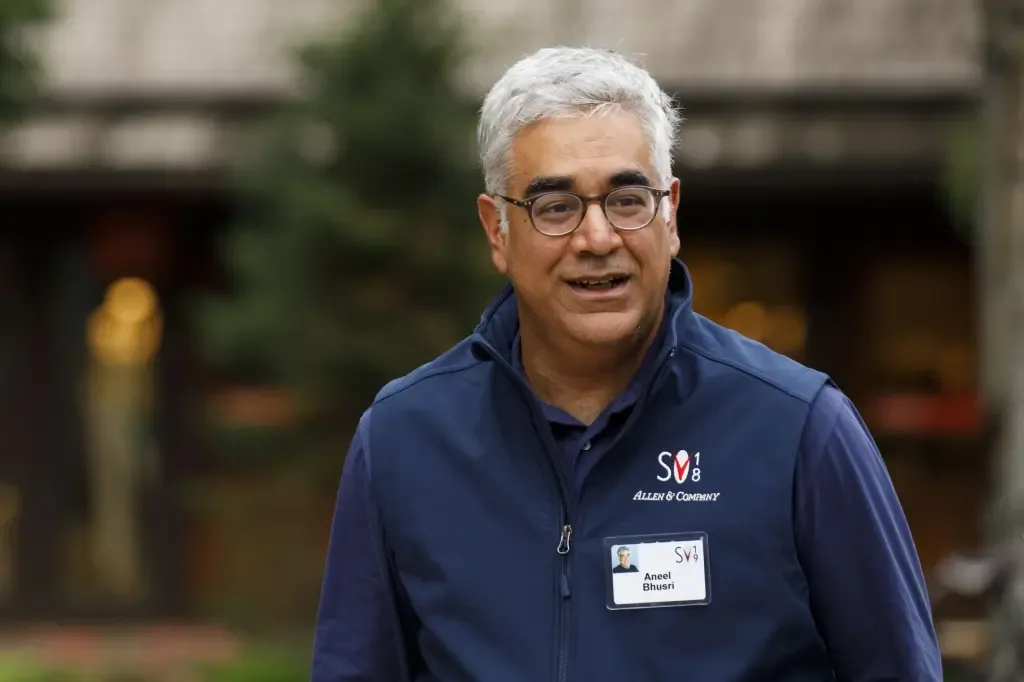
Aneel Bhusri had already done the hard part once. He co-founded Workday, built it into a Fortune 500 company generating roughly 9.6 billion dollars in annual revenue, and in early 2024 stepped back from the CEO role to become executive chair, handing day-to-day leadership to Carl Eschenbach. Then, in February 2026, he reversed course and took the CEO title back. Before he did, he went looking for a precedent, and found one in Steve Jobs.
Borrowing a Playbook From Cupertino
Bhusri has said he specifically studied how Jobs handled his own return to Apple in 1997, a moment when the company he'd co-founded was close to bankruptcy and needed more than a change in leadership to survive. Jobs didn't just resume old habits when he came back. He restructured the company, cut product lines, and refocused Apple around a smaller set of bets, groundwork that eventually led to the iPhone. Bhusri's read on that era wasn't really about products. It was about how a founder returning to a company he built should think about organizing it again. "He was a management genius in the way he organized Apple," Bhusri said of Jobs.
What "Refounding" Looks Like at Workday
Workday isn't anywhere near the crisis Apple faced in the late 1990s, but Bhusri has framed his return in similarly structural terms, describing it internally as a refounding chapter built around artificial intelligence. One of the clearest signals of that shift: Workday trimmed its AI agents from 50 down to 20, a deliberate narrowing rather than an expansion, aimed at concentrating resources on fewer, stronger AI products instead of spreading the company thin across many smaller ones.
Bhusri has argued that staying competitive in enterprise software now means moving faster on AI capability in core back-office functions. "I came back to make sure we are super innovative with AI products," he said, pointing specifically to HR, finance, and legal work as areas where he expects AI to reach human-level performance within the business software Workday sells.