
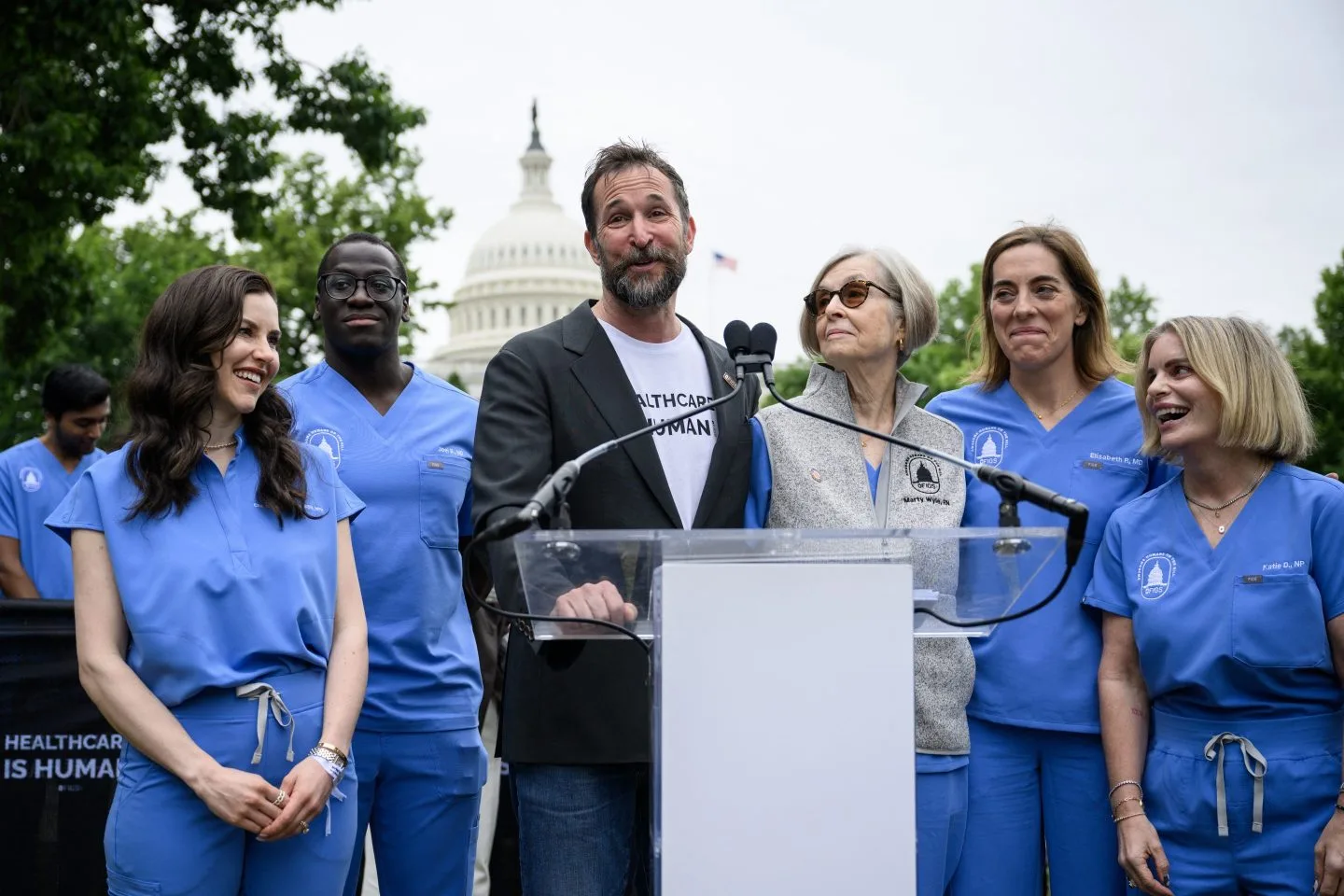
Noah Wyle has spent decades playing doctors on television, from his long run on ER to his current role on The Pitt. Now he is taking the issues those characters face into the real world, partnering with scrubs maker FIGS to relieve at least $200 million in medical debt across the United States.
The actor and the clothing brand will each donate $1 million to Undue Medical Debt over the next three years. The nonprofit buys and forgives qualifying medical debt, wiping out roughly $100 of debt for every $1 it receives. The commitment is expected to help more than 150,000 Americans, with the first round of relief timed for the holiday season.
A crisis hiding in plain sight
Americans owe at least $220 billion in medical debt, according to a 2024 KFF-Peterson analysis of federal survey data. Insurance does not always protect families. A recent Urban Institute study found that more than one-quarter of U.S. adults said they or a family member owed medical debt at the end of 2025, including 26 percent of people who had health coverage. Hospitals were the most common creditor.
A Commonwealth Fund survey released in September found that roughly one in three working-age adults with private insurance is paying off medical bills over time. Some are pulling from savings or cutting back on food and rent to keep up. The pressure has even made its way into Wyle's scripts. In one episode of The Pitt, a construction worker with $100,000 in existing medical bills lands in the emergency room with serious diabetes complications after rationing insulin he cannot afford.
Why this partnership
Wyle has served as FIGS' global brand ambassador and has joined the company on Capitol Hill to advocate for policies supporting health care workers. The medical debt initiative builds on their "Healthcare is Human" campaign, which addresses systemic pressures that make it harder for clinicians to care for patients.
"In my countless interactions with healthcare professionals over the decades, one thing that stays with me is how they try to do everything right for a patient while the system makes it harder than it should be," Wyle said in a statement. "Medical debt follows people home, creates long-term devastation, and changes the whole experience of care."