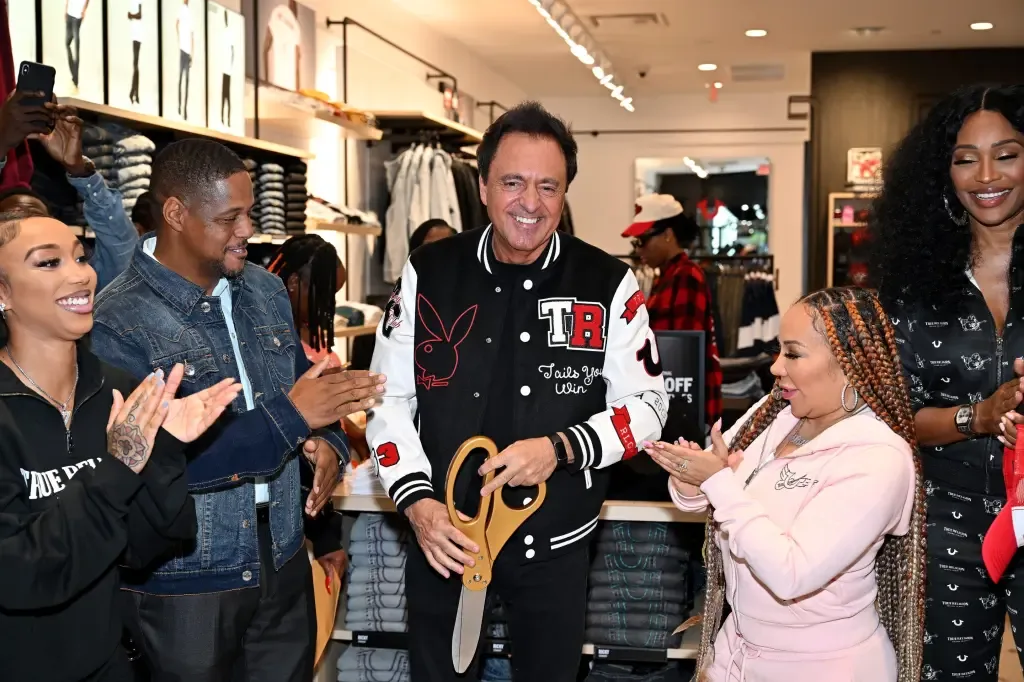
True Religion built its name on being everywhere in the 2000s, the horseshoe-pocket jeans that Paris Hilton and Jessica Simpson wore when 200-dollar denim was a status symbol. The brand filed for bankruptcy in 2017, and again in 2020. Now, under CEO Michael Buckley, who first led the company from 2006 to 2010 and returned in 2019, True Religion says it's headed for its highest revenue year ever, built on a strategy aimed less at reclaiming its old audience than at building an entirely new one.
From Two Bankruptcies to a Projected Record Year
Buckley has been clear about where he places the blame for the brand's earlier collapses: excessive debt and the pandemic, not a weak brand itself. Whatever the cause, the recovery has been real on paper. True Religion is projecting 525 to 550 million dollars in revenue for 2026, which the company describes as its highest total ever, with a five-year goal of reaching 900 million dollars.
"First to Be Second"
The philosophy behind the turnaround is summed up in a line Buckley uses often: "We like to be first to be second." Rather than trying to set trends the way the brand once did, the strategy is to spot what's already proven to resonate with younger shoppers and move on it quickly, a deliberately less risky approach than betting on original trend calls in a fashion category that moves fast and punishes misses.
Lower Prices, a Different Customer
The clearest shift shows up in pricing. Jeans that once ran 200 to 300 dollars now sell for 59 to 89 dollars, and T-shirts run 19 to 39 dollars, a repositioning made possible by an overhauled supply chain that's testing cheaper fabric alternatives against the Italian materials the brand built its reputation on. Denim still makes up 35 to 40 percent of the business, but the company has expanded hard into hoodies, dresses, joggers and outerwear to round out the assortment.
The customer base has shifted just as much as the price tags. Between 2006 and 2010, True Religion's shoppers skewed affluent, with household incomes above 250,000 dollars. Since 2019, the target has moved to a much broader range: ages 15 to 45, household incomes between 65,000 and 85,000 dollars, and a more diverse customer base overall. In-store, the brand has leaned into customization, including bedazzled initials, and crystals show up across nearly every product category now, a callback to the brand's bling-heavy aesthetic reworked for a lower price point.
Music, Concerts and a Four-City Push
True Religion has also leaned on culture and music partnerships to reach younger shoppers directly, including collaborations with Megan Thee Stallion and Zara Larsson. In September, the brand launched a four-city concert series with UnitedMasters, kicking off September 10, 2026 in New York with a performance from Dess Dior, part of a broader bet that live events and brand-sponsored experiences carry more weight with younger consumers than traditional advertising does.
The Research Behind the Bet
That bet has some data behind it. A Wired Research survey of 1,000 U.S. adults ages 18 to 45 found that nearly 75 percent of millennials and about 67 percent of Gen Z respondents said they're drawn to heritage brands specifically, not brand-new ones. Sixty percent of Gen Z respondents said brand-sponsored events and concerts influence their purchasing, compared with 50 percent of millennials, and 79 percent of millennials said they'd rather consolidate their spending with fewer trusted brands than chase something new every season. Retail analysts including John Talbott and Neil Saunders of GlobalData Retail have pointed to True Religion's distinctive horseshoe pocket as a real asset in that environment, instant brand recognition in a moderately priced denim market crowded with competitors like American Eagle, Abercrombie & Fitch, Levi's and Wrangler. Whether heritage recognition and lower prices are enough to hit a 900 million dollar target in five years is still an open question, but for a brand that's been through bankruptcy twice, a projected record year is itself the headline.