
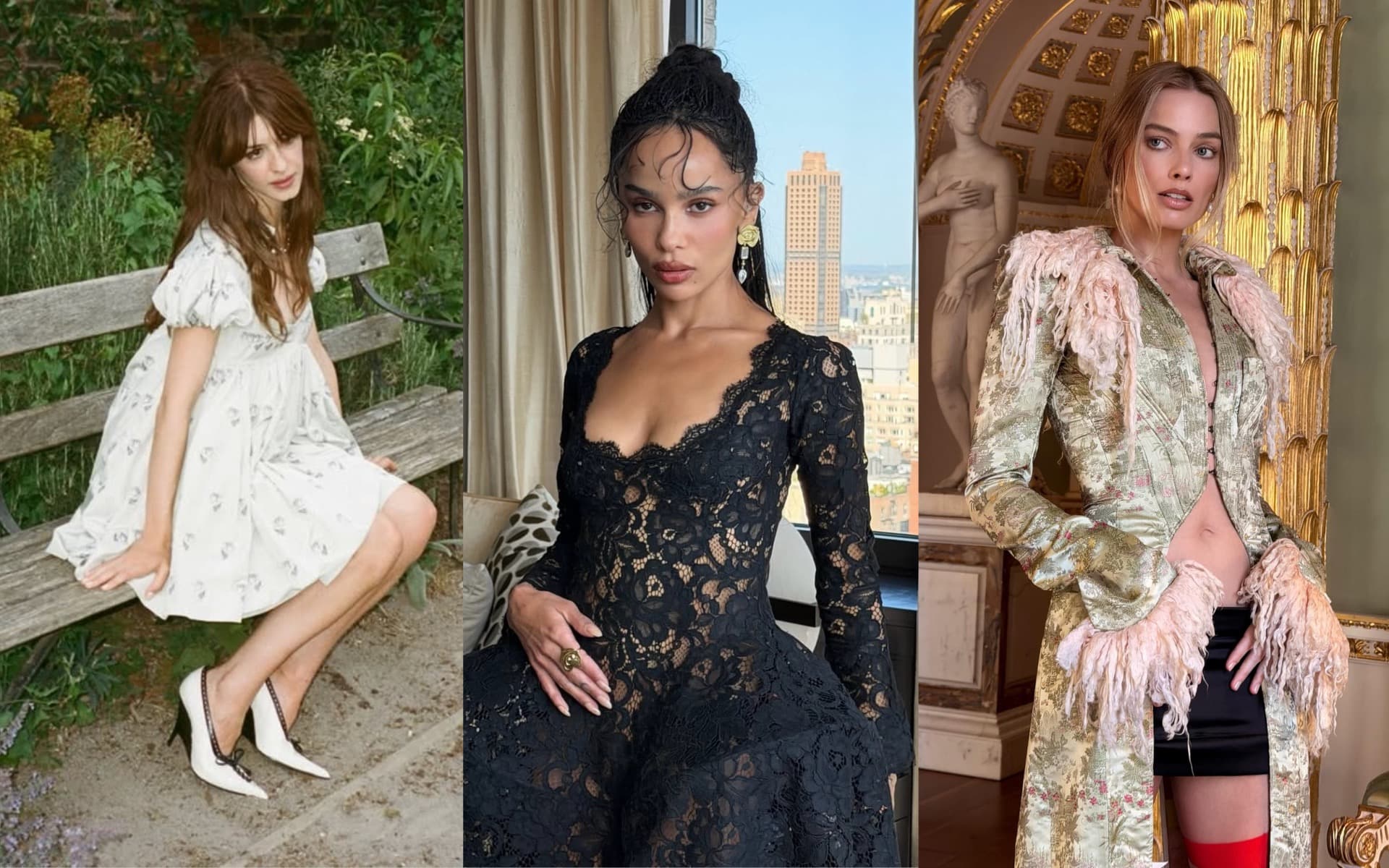
Romantic dressing, all billowing silhouettes, warm tones and mixed textures, has worked its way back onto runways and into closets, and it isn't hard to read as a direct response to how long minimalism and quiet luxury have held the floor. Fashion is getting emotional again, and the timing lines up with a broader cultural mood: the pandemic-era #romanticiseyourlife trend, born from lockdown routines and popularized on TikTok, spent years training people to view the mundane through a dreamier lens, and fashion has simply caught up.
An old argument, replayed
The pattern has precedent. The original Romantic movement emerged in late-18th-century Europe as a direct reaction to the Industrial Revolution and the Age of Enlightenment's emphasis on logic and reason, with artists and writers turning to emotion, nostalgia and nature instead. Today's version looks a lot like that instinct resurfacing against a tech-driven world: a craving for handcrafted, slightly imperfect things, alongside a full-on nostalgia cycle that includes period-drama dressing, high ruffled collars, corsets, billowy shirts, and new film adaptations of Pride and Prejudice and Sense and Sensibility both landing this year.
From Chloé's ruffles to the fall couture shows
Chemena Kamali's widely praised 2024 debut for Chloé, heavy on fringe, lace and boho ruffles, is often credited as the moment that closed the door on sterile minimalism. By fall 2026 couture, the mood had spread further: Chanel leaned into fairytale whimsy, while Schiaparelli and Jean Paul Gaultier both built collections around florals. Off the runway, younger shoppers have been chasing the same feeling through vintage, drawn to pieces with a lived-in history that an algorithm-curated wardrobe can't fake, a mood echoed even in music through releases like Bruno Mars' The Romantic and Olivia Rodrigo's most recent work.
Who's wearing it well
Zoë Kravitz, Daisy Edgar-Jones, Sabrina Carpenter and Margot Robbie have all become reference points for the look in practice, proof that romantic dressing reads as considered rather than costume-y when it's worn with intention. Fashion has always doubled as a form of quiet rebellion, and against a backdrop of digital polish and algorithmic sameness, choosing to dress like you feel something is starting to look like the actual statement.