
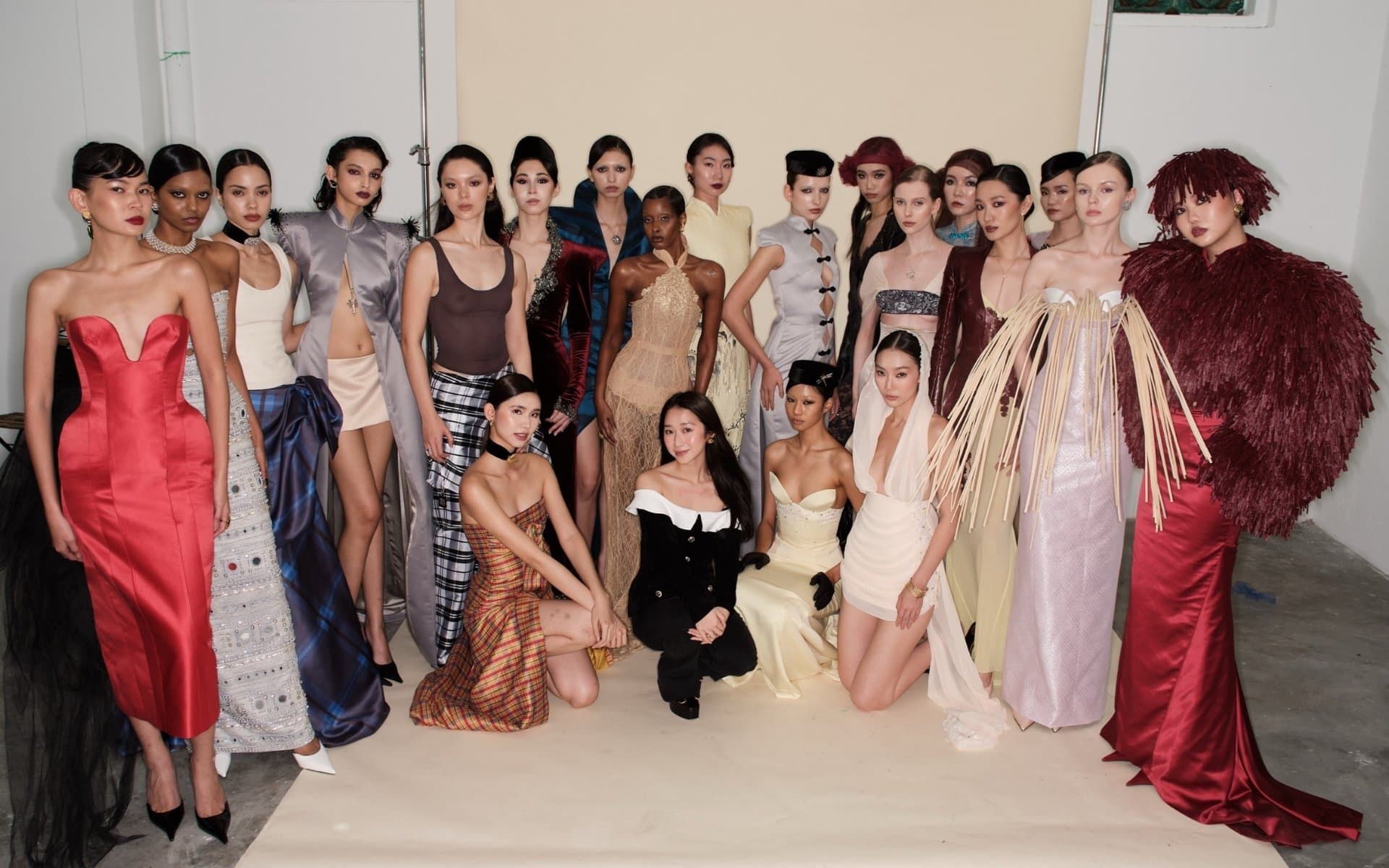
Phoebe Wong's debut collection landed this past May, but the London-based Malaysian couturier, a Central Saint Martins and Kingston University alumna, had already been building toward it for years through Campur, the final-year project that later dressed Grazia Malaysia cover star Daiyan Trisha and appeared on Jestinna and Christinna Kuan in past issues. Heirlooms extends that same instinct: heritage as something inherited, reinterpreted, and eventually passed on, rather than treated as pure nostalgia.
Heritage, not costume
"My work is deeply inspired by the traditions I grew up with, my Malaysian heritage, and the beauty found in my everyday life," Wong says, tracing it back to childhood dress-up games with her mother's wardrobe. What drives the label now is more pointed: frustration at how absent Malaysian culture has been from global fashion conversation, and a refusal to wait for someone else to make space for it. "Heritage should never become a costume or simply a visual reference," she says. "It requires respect, research, and understanding." Every collection starts with months of research, museum visits, and documentation of traditional crafts before she develops embroidery techniques and textile experiments alongside artisans, a genuinely collaborative process rather than a top-down design exercise.
The parts nobody applauds
Wong is candid about what doesn't make it into the applause: couture's labor intensity, the financial precarity of building a brand slowly in an industry built for speed, and the emotional toll of constantly balancing creative integrity against commercial survival. "Sometimes saying no to opportunities that don't align with the brand is just as important as saying yes," she says. The support network around her is concrete rather than abstract, before her most recent showcase, with one look at risk of not being finished in time, her relatives stepped in to hand-cut leather flowers from a repurposed jacket with less than 12 hours to spare.
What she'd want to see next
Asked who she'd want to collaborate with, Wong names Schiaparelli's Daniel Roseberry for his theatrical, storytelling-driven approach, and Malaysian designer Uzair Shoid locally, citing a shared instinct for bold color and print. For now, her focus stays close to home: proving that Malaysian craftsmanship belongs in the same conversation as the maisons she trained alongside in London.