
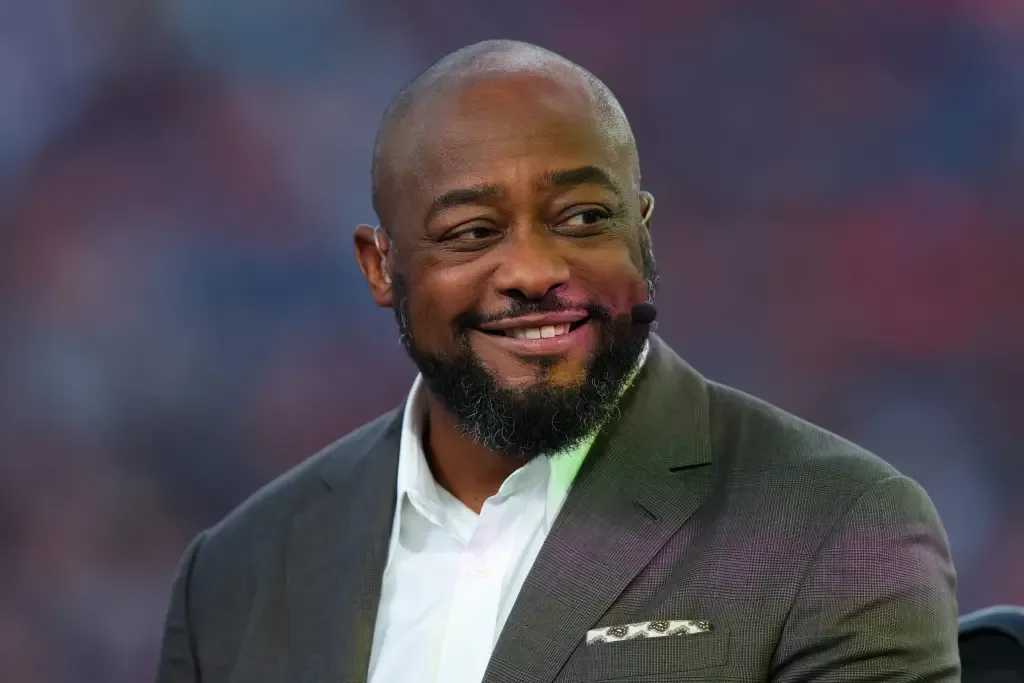
For twelve years, Mike Tomlin kept a habit that had nothing to do with football. While he was running one of the NFL's most consistent franchises, he was also quietly laying out streets, skylines and rooftop gardens in Minecraft, piece by piece, in whatever hours he could find away from the building.
It Started as a Way to Connect With His Sons
Tomlin has said the hobby began the way a lot of parent hobbies do: he wanted to understand what was holding his teenage sons' attention for hours at a time. Speaking on Late Night with Seth Meyers, he explained that his early interest came from watching them play, not from any plan to build something of his own. "I got interested because I just was mesmerized by what could occupy their attention," he said.
What began as curiosity turned into a project he kept returning to long after his sons moved on to high school and college. Last week, Tomlin pulled the curtain back on just how far that project had gone, launching a YouTube channel built around the city he had constructed. The first video, titled "Rooftops, Penthouses, and Urban Living," has already drawn more than 3.4 million views. In it, Tomlin walks through high-rises, a speakeasy, an aquarium and a baseball stadium he designed himself. "I really got obsessed with rooftop penthouses," he said of the project's later stages.
A Mixed Reaction From the Football World
The reveal landed differently depending on who was watching. Some fans and former players treated it as a glimpse into an unexpectedly creative side of a coach known mostly for his sideline intensity. Others were less impressed. Former Steelers running back Le'Veon Bell was blunt about it, writing that Tomlin was "building worlds, but he ain't making plays for me," a jab that tied the hobby to criticism of Tomlin's play calling and the Steelers' eventual split with him in January 2026 after 19 seasons without a losing record, including a Super Bowl title.
Whether the two things are actually connected is a separate question. During his nearly two decades in Pittsburgh, Tomlin built one of the most durable track records in modern coaching, and he was reportedly paid 16 million dollars in his final season. A side project built an hour at a time over twelve years is a thin argument for distraction when stacked against a résumé like that.