
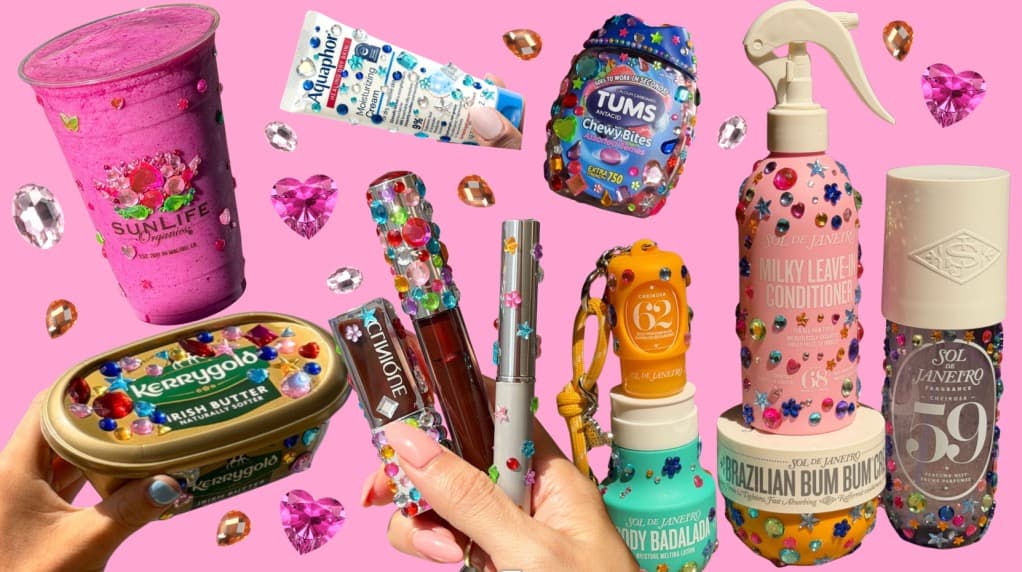
Rhinestones are showing up on nearly everything Gen Z buys, from coffee cups and smoothies to face masks, phone cases and even tubs of butter. Dubbed "whimsymaxxing" online, the trend picked up serious momentum after Kylie Jenner's bedazzled 29th birthday celebration in August 2026, and it hasn't slowed since. Sephora brand manager Euan Franco said the store has fielded customers asking specifically whether their smoothies could be served in rhinestoned cups, a request that would have sounded absurd just a year earlier.
An old economic signal in new packaging
Analysts see something familiar underneath the glitter: a modern version of the "lipstick index," the theory that consumers reach for small, affordable luxuries instead of major purchases when they're anticipating a tougher economy. A pack of rhinestones costs far less than the big-ticket items Gen Z might otherwise want, making bedazzling a low-cost way to feel like they're upgrading something. Social media manager Jalyn Marshall put it plainly: "The product itself almost becomes secondary to the experience, aesthetic, and shareability."
The numbers behind the sparkle
The scale is real. Gen Z spent an average of $374 on beauty products in 2025, up 10% from the year before, and 58% of the generation says its purchases are shaped directly by social media recommendations. A single Sephora post showing a bedazzled face mask pulled in 2.5 million views and 165,000 likes. Google search interest in "whimsy" hit its peak score in early July 2026, alongside a 141% jump in Pinterest searches for "y2k it girl" since 2024, tying the trend to a broader wave of Y2K nostalgia. With Gen Z's purchasing power projected to reach $12 trillion by 2030, and women now holding more payroll jobs than men for the first time since 2008, the rhinestone wave looks less like a passing gimmick and more like a preview of where a rising generation of spenders is headed.