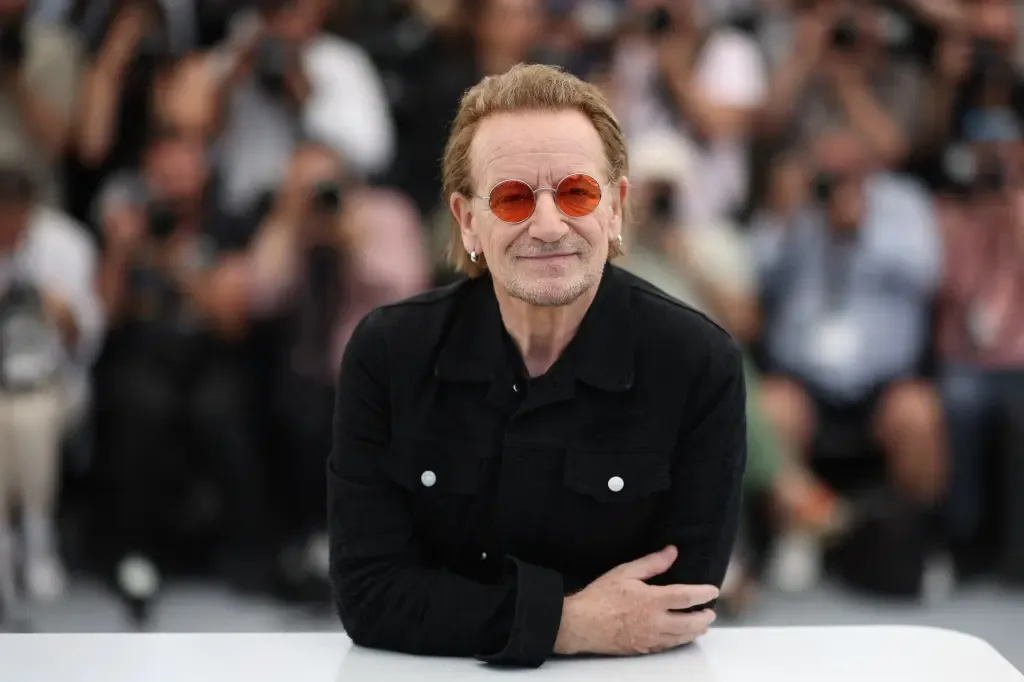
U2 just opened presales for its "Greatest Hows on Earth" world tour, set to kick off February 23 in Mexico City, and frontman Bono isn't dodging questions about how much the tickets cost. Instead, at 66, he's making an unusually direct case for why some fans should pay far more than others for the same show.
"Rich People Have Feelings Too"
Asked about ticket pricing, Bono didn't lean on the usual talk of market dynamics or production costs. He put it plainly: "We also have no problem separating rich people from their money." He went further, framing high-end pricing almost as a courtesy to wealthy fans rather than a burden on them. "Rich people have feelings, too," he said. "If they want to pay very high prices, we've no problem." His stated goal for the broader fan base is that people "feel really good about the choice to pay a ticket, and probably pay too much for it," an acknowledgment that even the band's standard pricing runs high by design, not accident.
Bono also pushed back on the idea that U2 controls the full spectrum of what tickets cost, saying the band has "very little" influence over final pricing once a show goes to market. Where he says the band does intervene is at the bottom of the price range, working to keep a meaningful number of good seats within reach rather than letting every ticket float to whatever the market will bear.
What the Prices Actually Look Like
The numbers from the tour's São Paulo dates illustrate the spread Bono is describing. A basic "Fan Ticket" runs around R$500, roughly 100 dollars, while general admission floor access costs about R$790, or roughly 158 dollars. At the top end, an Ultimate VIP package climbs to R$7,547, close to 1,510 dollars, more than fifteen times the price of the cheapest ticket in the building. For comparison, U2's 2023-24 residency at the Las Vegas Sphere priced tickets between 140 and 600 dollars, a narrower band than the new tour's VIP tier now reaches.
A Pricing Debate U2 Isn't Entering Quietly
The timing puts U2's comments against a rough stretch for the live-event industry's reputation on pricing. Ticketmaster and its parent company, Live Nation, were found liable in April 2026 for illegal monopoly practices, with a jury determining an overcharge of 1.72 dollars per ticket. Dynamic pricing in particular has drawn sustained criticism elsewhere in music, most visibly when prices for Oasis's reunion tour shot past their advertised levels as demand spiked in real time. Artists from Olivia Rodrigo to major legacy acts have faced similar scrutiny over how tickets to their shows get priced and resold.
Against that backdrop, Bono's comments read less like a defense of a flawless system and more like an attempt to say plainly what most acts leave unsaid: that ticket pricing is tiered on purpose, that the wealthiest fans are expected to absorb the biggest share of the cost, and that the band sees nothing wrong with that trade. Whether fans accept that framing may matter less than what happens on November 25, when U2 headlines the halftime show for the NFL's first Thanksgiving Eve game, streaming on Netflix to an audience far larger than any arena the band will play this tour.